Kenya generated an estimated 56,000 tonnes of electronic waste in 2025, a figure that connects technology growth with business decisions and wider industry concerns. Coverage of business technology media in Kenya brings these strands together, reporting on company performance, digital services, cybersecurity, innovation and the effects of technology on commerce and society. It also considers how media itself is changing as new tools and risks influence the production and circulation of news.
For business leaders, entrepreneurs and readers following the media sector, these developments are closely connected: changes in connectivity or digital security can affect organisations, audiences and how information travels. This article explains how business technology media in Kenya fits within broader media industry developments and what themes help readers interpret the coverage. It looks at key reporting areas, what they reveal about Kenya’s economy and technology environment, and the media questions shaping public discussion.
Key Takeaways
- Connect business and technology developments to their effects on Kenyan organisations, markets and audiences.
- Recognise how changes in media and information distribution shape coverage of industry news.
- Use ownership context to better understand the structure and editorial position of major outlets.
- Assess audience reach by considering the different platforms and measures used to describe media audiences.
Kenyan business and technology news
Kenyan business coverage follows company results, prices, investment, employment and the conditions shaping trade. Technology reporting adds connectivity, cybersecurity, innovation and digital services to that picture. At the end of June, Kenya had 64.3 million mobile data subscriptions, up 9.7 percent from a year earlier. For readers, that growth provides context for stories about mobile commerce, digital access and services delivered through phones.
Compared with East African outlets, Kenyan publications report within a national business and policy context, while regional outlets connect developments across multiple countries. A story about a Kenyan technology firm may focus on local customers, regulation or investment; regional coverage may explore how similar business models operate across East Africa. The useful comparison is editorial scope, not a single measure of quality or influence.
Advertising costs vary by placement, audience, format and campaign duration, and are provided after a quote request. When assessing an advertising plan, distinguish paid placement from independent editorial coverage: they serve different purposes. The intended audience and the outlet’s distribution channels also affect the value of a placement.
To pitch a story or submit a press release, identify the relevant business or technology desk, then write a concise subject line and clear news angle. Include the key development, its relevance to Kenyan readers, supporting evidence and an informed spokesperson. A cybersecurity announcement, for example, is more useful when it explains the local business impact rather than relying on product claims alone.
Credibility risks include unclear separation between advertising and journalism, unsupported claims, and weak verification of sources. Digital traffic attacks on Kenyan websites increased by 114 percent in a year, while AI-fuelled misinformation ahead of Kenya’s 2027 polls makes source checks especially pertinent. Readers should compare a claim with its evidence, distinguish reported fact from opinion, and look for transparent corrections. These checks help businesses assess coverage without treating reach or confident presentation as proof of accuracy.
Media industry news
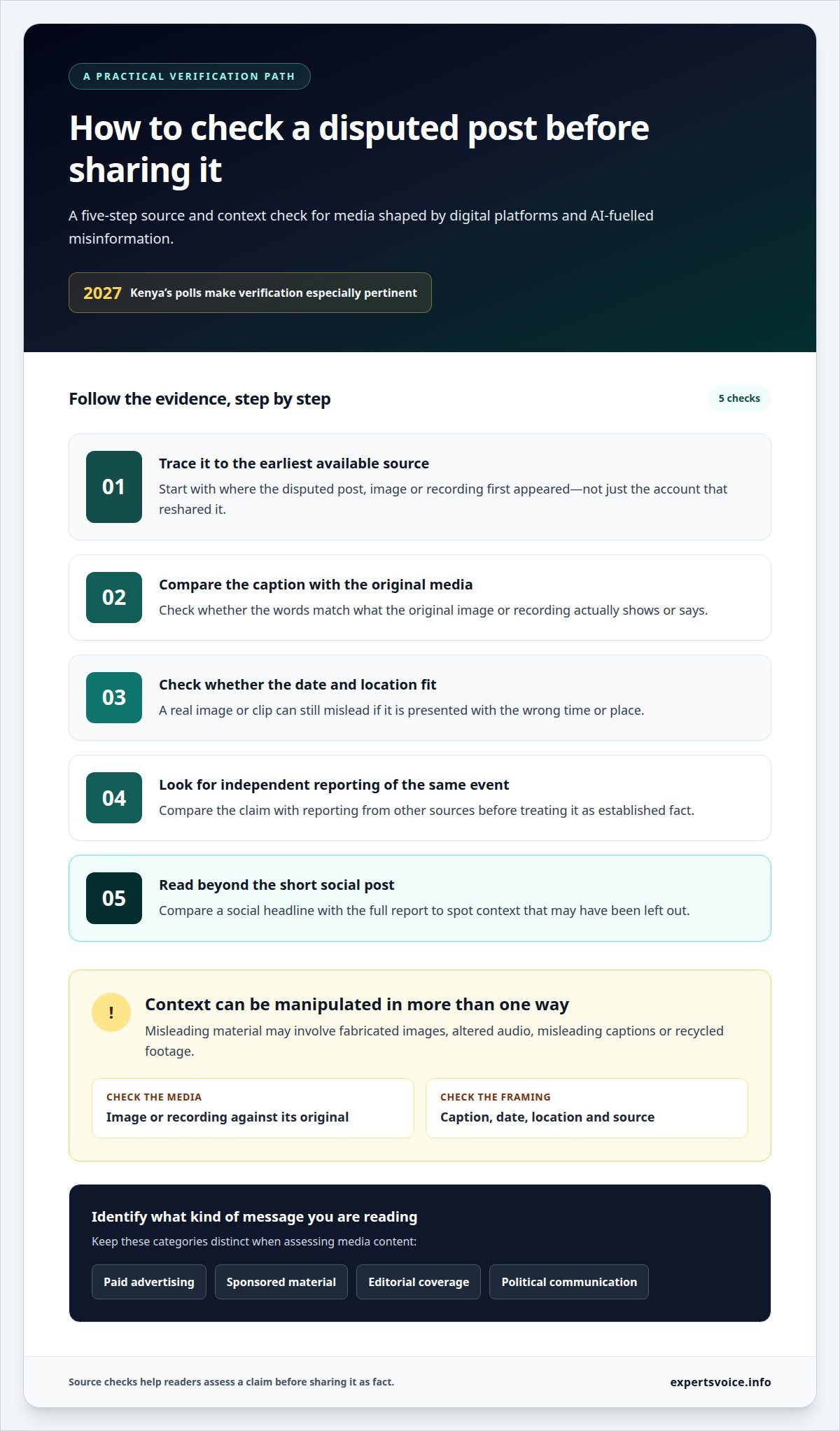
Media industry coverage in Kenya increasingly examines how digital platforms affect reporting, distribution and public trust. One prominent issue is AI-fuelled misinformation ahead of Kenya’s 2027 polls. The concern extends beyond fabricated images: altered audio, misleading captions and recycled footage can also distort a story’s context. These developments make verification practices relevant to newsrooms, businesses and audiences.
For readers, a practical way to assess a disputed post is to trace it back to its earliest available source. Compare the caption with the original image or recording, check whether the date and location fit, and look for independent reporting of the same event. A political clip circulating before the 2027 polls, for example, deserves scrutiny of its source and context before it is shared as fact.
In Kenya, advertising and media requirements depend on the channel and content. Distinguish paid advertising, sponsored material, editorial coverage and political communication, then assess the applicable obligations before publication. This distinction also helps audiences recognise whether a message is promotional or independently reported.
Technology changes how media organisations work as well as the stories they cover. A newsroom publishing a business report in print, online and on social platforms must keep the central facts consistent while adapting the presentation to each format. Readers can compare headlines with the full report to spot context omitted from a short social post. For businesses, clear documentation makes claims easier to assess and discuss.
Industry coverage is most useful when it connects media changes to their consequences. A report on AI-generated political content, for instance, can examine verification methods, distribution channels and the risks of mistaken attribution, rather than repeating an unverified claim. Readers following Kenyan media and industry developments can use that wider context to interpret how technology affects public communication and business reporting.
Who owns Kenya's major business and technology media outlets?
Ownership varies by outlet, so distinguish a publication’s name from its parent company. Business Daily Africa and Citizen Digital, for example, are outlet names; the organisations behind them hold ownership. The outlet’s masthead and corporate disclosures are useful starting points. A byline identifies a journalist, not the publication’s owner.
To assess an outlet’s ownership, follow a consistent sequence. First, check its official masthead or about page for the publishing entity. Next, look for corporate disclosures naming parent companies or shareholders. Then compare those details with the outlet’s description of its editorial operation. This approach separates a media brand from its legal or corporate owner without assuming that similarly named platforms share ownership.
Ownership provides context for evaluating business coverage, but it does not prove that every story reflects an owner’s views. Consider ownership alongside editorial leadership, corrections practices and the separation of advertising from reporting. For example, assess a Business Daily Africa company profile by its sourcing and evidence, rather than drawing conclusions from the outlet’s corporate parent alone.
Readers can also distinguish between ownership categories. A publication may belong to a larger media group, operate under a standalone company or be part of a broader business with media interests. Look for the named publishing entity and its disclosed corporate relationships, rather than making assumptions based on a familiar brand or prominent personality.
For practical research, record the outlet name, publishing company, disclosed parent or shareholders, and disclosure date. Use the same method for The Standard, Citizen Digital and specialist technology publications. If corporate information changes, dated records help explain why an older article names a different owner. This framework clarifies Kenya’s media landscape while keeping ownership distinct from editorial judgment.
What are the audience sizes and reach of Kenyan business and technology media?
Audience reach depends on the channel and the measurement used. A print publication may report circulation, while a website may report unique visitors, sessions or page views. Social platforms add followers, video views and engagement. These measures describe different behaviours and should not be treated as interchangeable audience totals.
A reader might visit Business Daily Africa’s website, see its social post and later read a print edition. Adding each channel’s reported audience could count that person more than once. Cross-platform reach therefore depends on whether the figures measure distinct people, visits or exposures. Before comparing outlets, identify the metric and reporting period.
Geographic distribution also affects what a reach figure means. A publication may have strong national visibility, while a specialist technology outlet reaches a narrower audience interested in cybersecurity or digital services. The relevant audience depends on the story: a mobile-payment analysis may suit technology readers, while company earnings may interest investors and business decision-makers.
To evaluate an outlet’s reach, use a consistent checklist:
- Channel: Separate print, website, newsletter, video and social distribution.
- Metric: Distinguish people from visits, views, followers and interactions.
- Period: Compare figures from the same reporting period.
- Audience fit: Consider whether readers match the topic and intended geography.
Kenya’s 64.3 million mobile data subscriptions at the end of June indicate substantial potential for digital access, but subscriptions are not equivalent to media readers. They do not show how many people visit a particular outlet or engage with a specific story. For a practical assessment, request the outlet’s audience figures by platform and metric, then compare them with the intended readership rather than relying on a single headline number.
For a focused view of Kenyan business and technology coverage, explore relevant industry reporting and assess how its subject matter aligns with your audience.
The earlier baseline was 58.6 million mobile data subscriptions a year before the total reached 64.3 million at the end of June. That increase provides context for the scale of potential digital access, but it still cannot establish how many people read business or technology coverage, or which outlets they choose. Outlet-level audience measures remain necessary.
Experts Voice: Experts Voice Digital Media & Knowledge Platform
Experts Voice is a useful next point of reference for readers exploring Kenyan business and technology developments in a broader media context. Its Experts Voice Digital Media & Knowledge Platform brings together knowledge-sharing across subjects, helping readers connect industry developments with wider conversations.
Turn to the platform when you want perspective beyond a single headline or are following developments across business, technology and media. It offers a place to continue exploring without treating audience reach, ownership or one news claim as the sole measure of significance.
Continue the conversation by contacting Experts Voice or visiting expertsvoice.info.
Make Your Next Reading Step More Deliberate
Turn routine news reading into a focused practice. Choose a business or technology question relevant to your work, then follow how coverage develops across outlets and formats. Note the evidence supporting each report, the perspectives that are missing and how the issue changes over time. This approach builds context instead of treating every headline as a separate event.
For anyone following business technology media in Kenya, sustained attention can reveal links between commercial decisions, technological change and public discussion. Experts Voice’s digital media platform offers a place to explore industry knowledge and perspectives further.
To continue your inquiry, contact Experts Voice. A considered reading practice can make the next development easier to understand and assess.
Frequently Asked Questions
What are the leading business and technology media outlets in Kenya?
Business Daily Africa, The Standard, Citizen Digital and Techweez are useful reference points for business and technology coverage. The most relevant outlet for business technology media in Kenya depends on the subject, audience and format. Compare recent reports on the same issue, such as a company announcement, to see which publications provide useful context and distinguish reported information from promotional claims.
Which Kenyan publications cover business, startups, technology, and innovation?
Business Daily Africa and The Standard cover business topics, while Citizen Digital and Techweez publish digital coverage that includes technology and innovation. When researching startups, compare how reports explain a product, its intended users and its place in the market. Separating a founder’s claims from independently supported details helps readers assess the substance of a report.
Which Kenyan media outlets offer business and technology news in print, online, radio, or TV?
Business Daily Africa and The Standard publish print and online news, while Citizen Digital offers online coverage. Radio and television outlets may include business or technology stories in broader news programmes. For business technology media in Kenya, identify the original outlet and format, then compare the full report with any shortened broadcast or social post to see which details remain in context.