
The Alkaline Milk Test is one of the important quality control procedures demonstrated by the Kenya Dairy Board to help farmers, milk traders, and processors ensure that milk is safe for consumption and suitable for processing. The test is used to determine whether milk has been adulterated with alkaline substances such as sodium carbonate or sodium bicarbonate, which are sometimes illegally added to mask acidity in spoiled milk.
When fresh milk begins to spoil, bacteria convert lactose into lactic acid, making the milk acidic. Unscrupulous traders may add alkaline chemicals to neutralize this acidity and make the milk appear fresh. The Alkaline Milk Test detects such tampering.
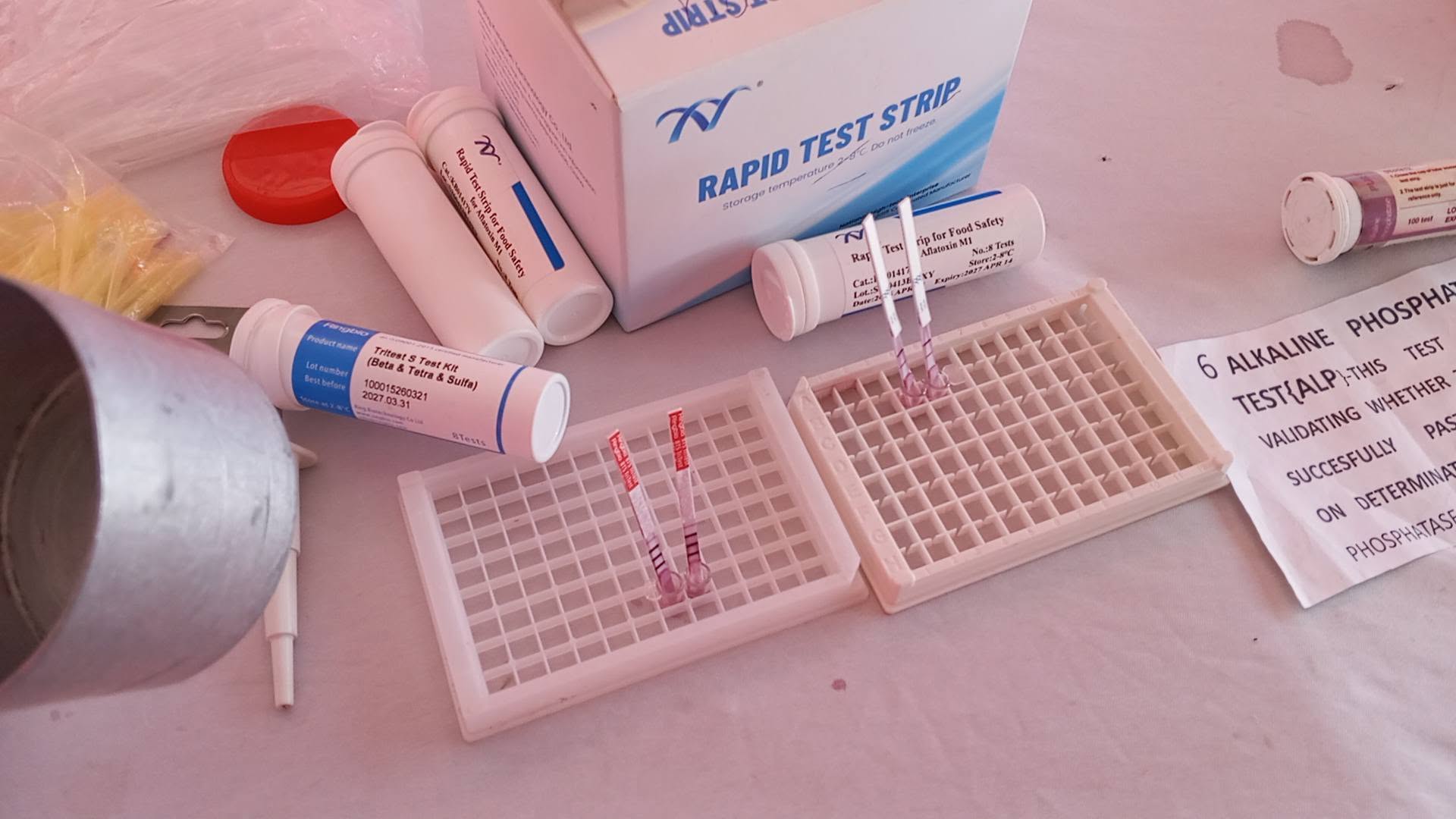
During the test, a small sample of milk is placed in a test tube or container, and a special reagent is added. If the milk contains alkaline substances, the reagent changes colour, indicating possible adulteration. If there is no colour change, the milk is considered free from added alkalis. The test is quick, easy to perform, and provides reliable results for routine quality inspections.

The importance of the Alkaline Milk Test cannot be overstated. It protects consumers from consuming poor-quality or chemically altered milk, supports fair trade within the dairy industry, and helps processors receive genuine raw milk for producing high-quality dairy products. It also encourages farmers and milk traders to maintain proper hygiene, cooling, and storage practices instead of using illegal chemicals to preserve milk.

Through demonstrations at agricultural shows and farmer training sessions, the Kenya Dairy Board continues to educate stakeholders on milk quality testing. The Alkaline Milk Test is one of the many tools that promote food safety, consumer confidence, and a healthier dairy industry in Kenya by ensuring that only clean, natural, and wholesome milk reaches the market.