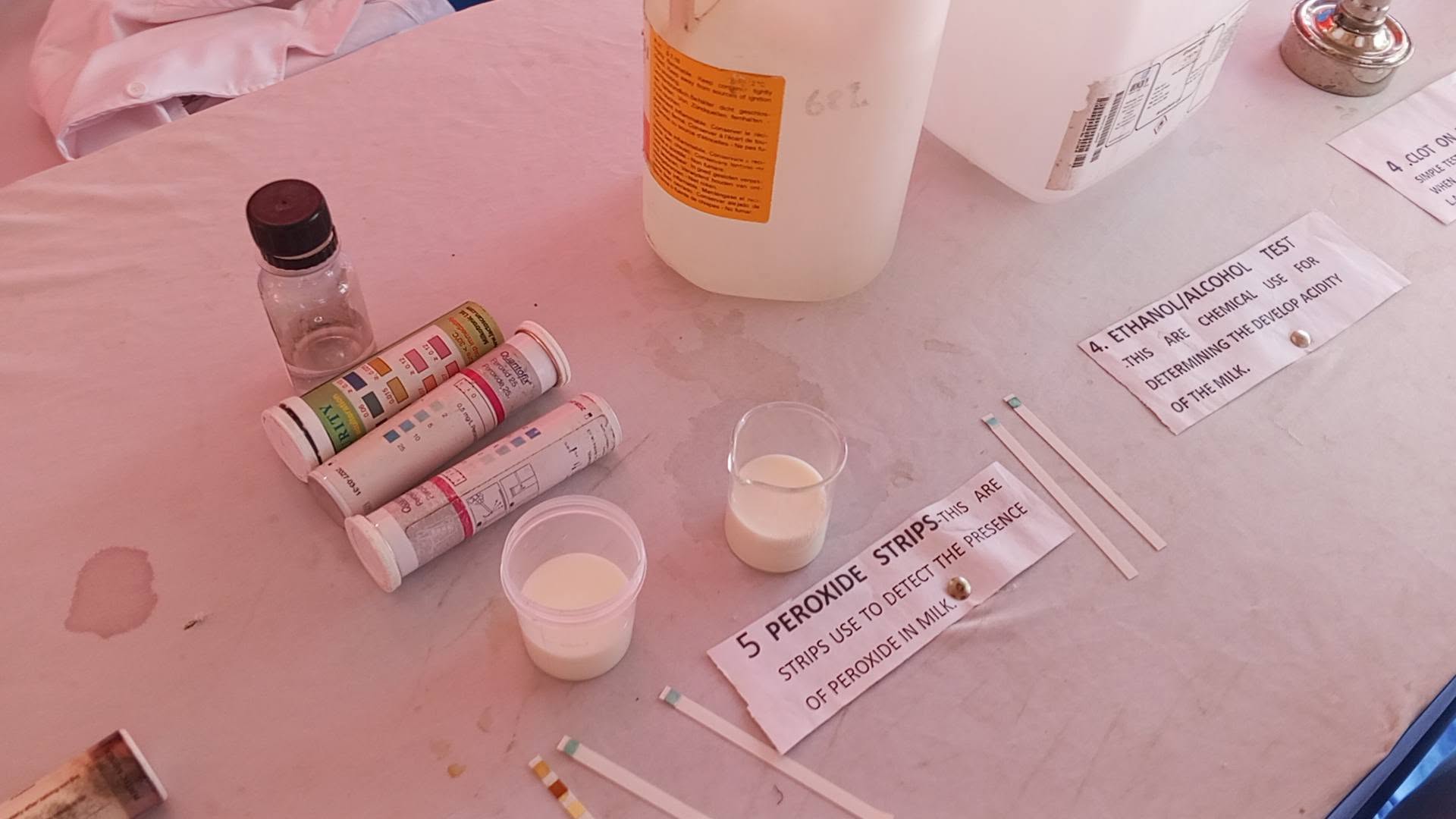

Milk quality testing is essential in ensuring consumers receive safe and wholesome dairy products. During the Nakuru ASK Show, the Kenya Dairy Board (KDB) demonstrated the use of Peroxide Strips, a simple but effective tool used to detect the presence of hydrogen peroxide in milk.
Hydrogen peroxide is sometimes illegally added to raw milk to delay spoilage by slowing the growth of bacteria. While this may make milk appear fresher for longer, the practice is prohibited because it can pose health risks and interfere with the natural quality of milk. The Kenya Dairy Board therefore carries out regular tests to ensure milk sold to consumers is free from such preservatives.
.jpg?width=749&height=499&name=iStock-1198993164%20(1).jpg)
Peroxide strips work through a simple chemical reaction. A strip is dipped into a milk sample or a few drops of milk are placed on the test pad. After waiting for the recommended time, the strip changes colour if hydrogen peroxide is present.
The resulting colour is then compared with the colour chart provided by the manufacturer. No colour change usually indicates that the milk does not contain detectable peroxide, while a noticeable colour change suggests contamination or adulteration.

The test is fast, easy to perform, and does not require complex laboratory equipment, making it suitable for use in milk collection centres, processing plants, and field inspections. It enables dairy inspectors to make quick decisions about the quality and safety of milk before it enters the processing chain.
By demonstrating peroxide strip testing at the Nakuru ASK Show, the Kenya Dairy Board educated farmers, traders, and consumers on the importance of maintaining milk integrity. The use of peroxide strips helps discourage milk adulteration, protects public health, supports fair trade, and strengthens confidence in Kenya's dairy industry.