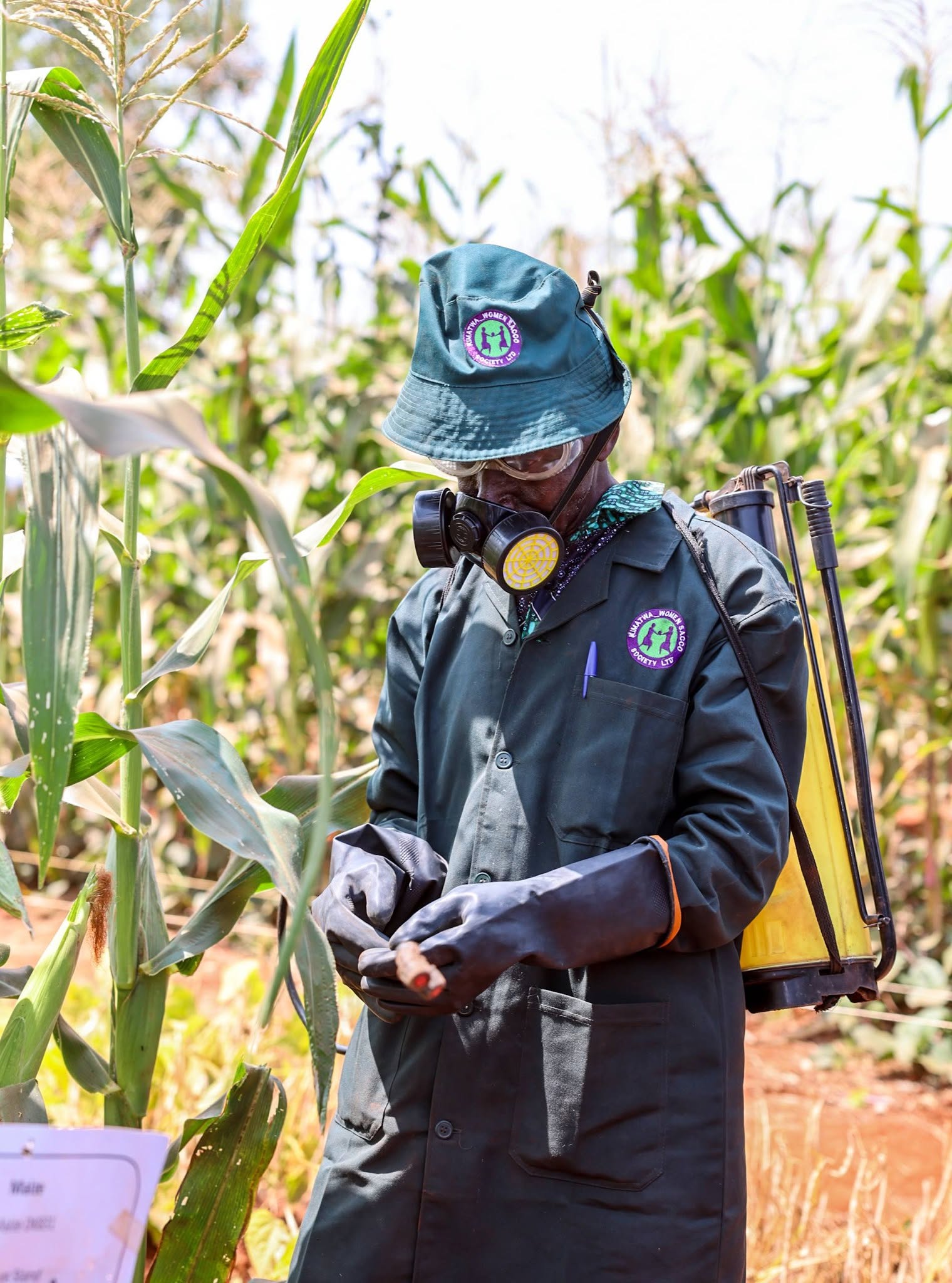

At the Makueni Agricultural Show 2026, farm safety emerged as a key message for farmers, with demonstrations emphasizing the importance of using protective gear when handling pesticides and other agricultural chemicals. The image of a farmer wearing full protective equipment while preparing to spray a maize crop serves as a reminder that a healthy farmer is the foundation of a productive farm.
Pesticides play an important role in controlling pests, diseases and weeds that threaten crop yields. However, if handled carelessly, they can pose serious health risks to farmers, their families and the environment. Wearing protective clothing such as gloves, overalls, gumboots, goggles and a respirator helps prevent chemicals from coming into contact with the skin, eyes and lungs.
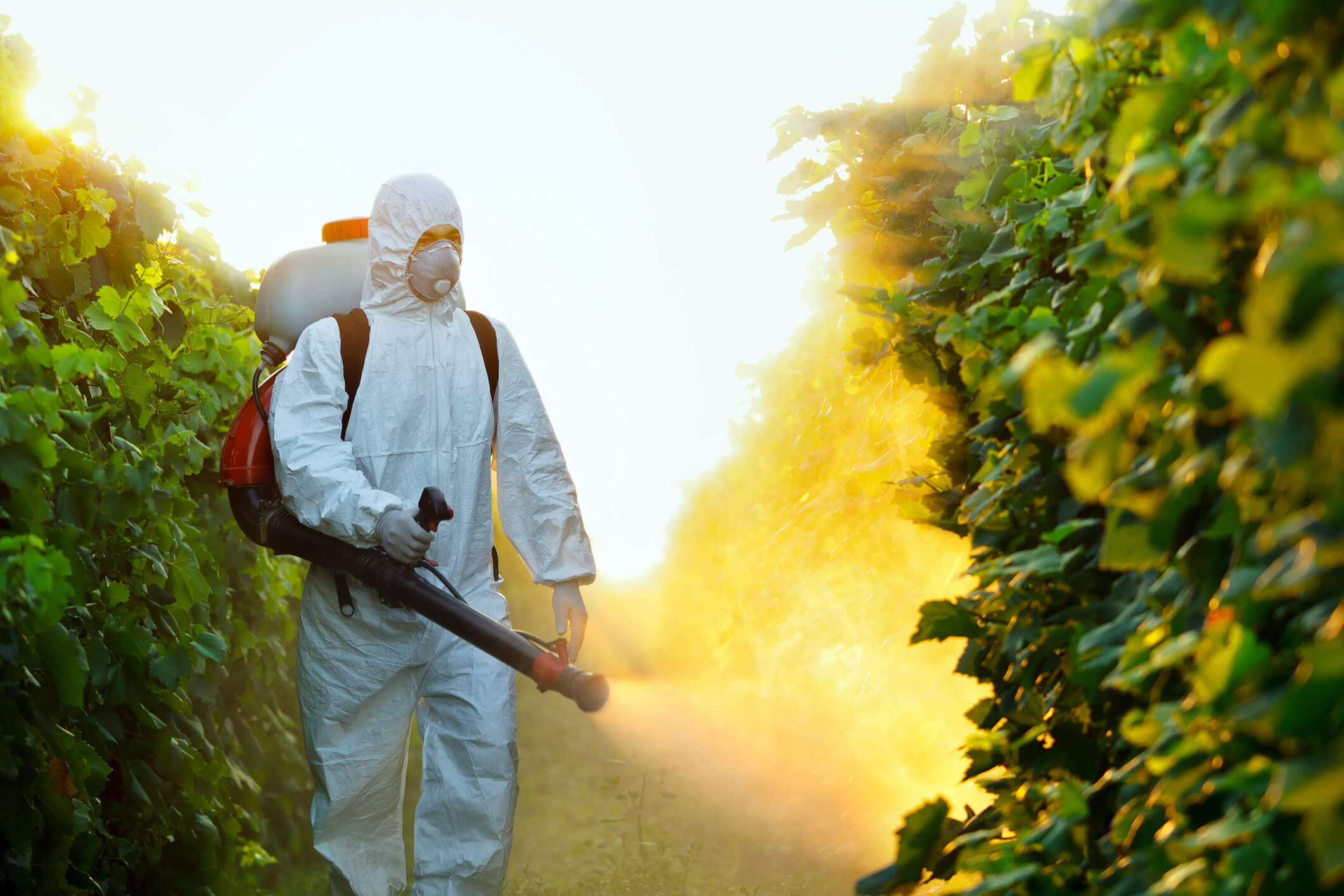
Farmers are also encouraged to read and follow the instructions on pesticide labels before use. Mixing chemicals in the recommended proportions, using the correct spraying equipment and avoiding spraying during strong winds can improve effectiveness while minimizing environmental contamination.
Another important safety measure is to avoid eating, drinking or smoking while handling pesticides. After spraying, farmers should wash thoroughly with clean water and soap, clean their equipment properly and store chemicals in secure places away from children, livestock and food supplies.
Empty pesticide containers should never be reused for storing water or food. Instead, they should be disposed of according to the manufacturer's guidelines or through approved collection systems. Integrated Pest Management (IPM), which combines good farming practices, biological control and responsible pesticide use, is also recommended to reduce dependence on chemicals.
By embracing proper farm safety practices, farmers protect their health, safeguard the environment and ensure the production of safe, high-quality food. Farm protection is not only about protecting crops—it is equally about protecting the people who grow them.