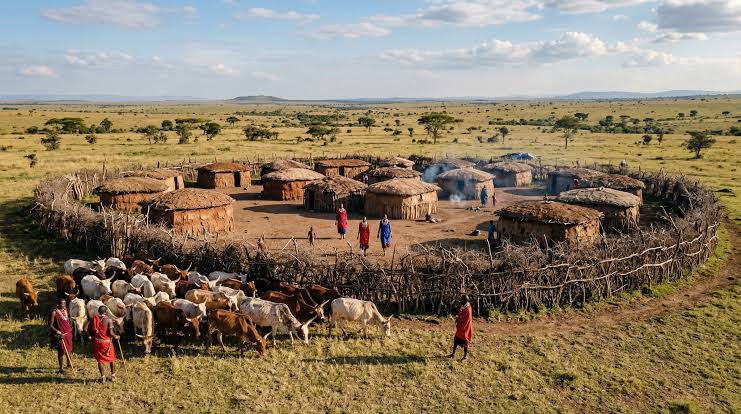
The Manyatta is more than a homestead to the Maasai people of Kenya and northern Tanzania. It’s a living blueprint of their culture, social order, and relationship with the land. Built for mobility and defense, the Manyatta reflects a way of life that has endured for centuries.

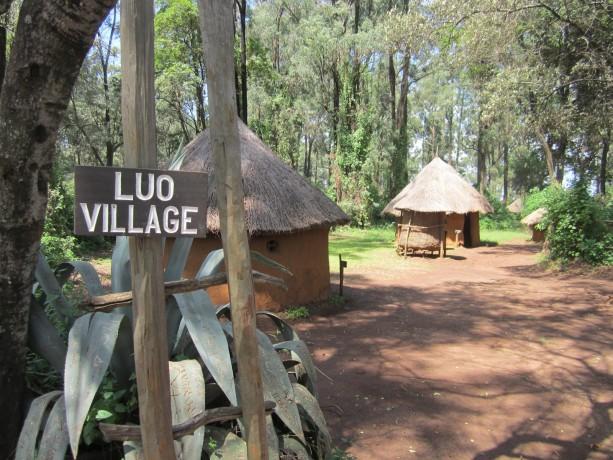
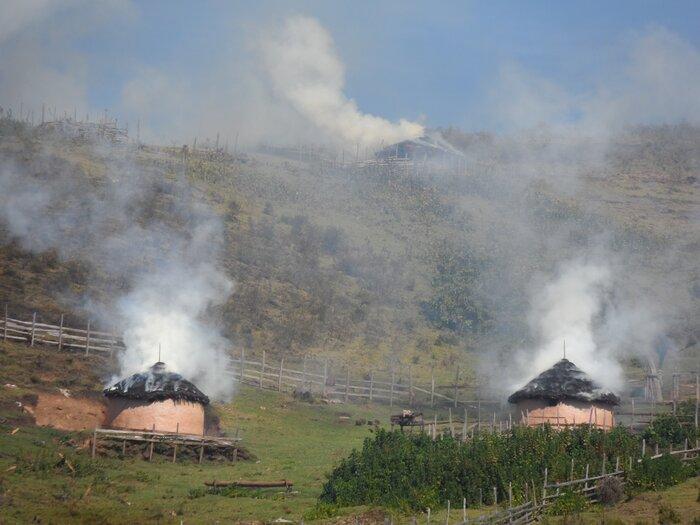
A Manyatta is a circular settlement enclosed by a thorny acacia fence called an _enkang_. The fence protects against predators and raiders, but its real purpose is to define a shared space for the extended family. Inside, several dome-shaped houses, _enkaji_, are arranged in a ring. Each house belongs to a wife and her children in polygamous households. The houses are built almost entirely by women using a frame of timber, mud, cow dung, and grass. The materials are local, biodegradable, and keep the interiors cool in the day and warm at night. A Manyatta is temporary. When pasture dries up, the entire community dismantles and moves, leaving little trace.

Life inside the Manyatta revolves around cattle, age-sets, and ritual. Cattle are wealth, food, and identity. Milk, blood, and occasionally meat form the traditional diet, with ugali and vegetables added when available. The social structure is organized by age-sets: boys become _morani_ or warriors, responsible for protection and herding; elders handle disputes and ceremonies; women manage the home and economy. This system creates clear roles and a strong sense of collective responsibility.
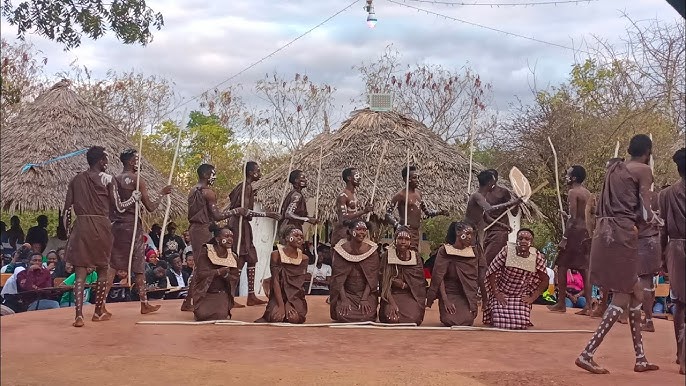
Ceremonies anchor the calendar. The _eunoto_ marks a warrior’s transition to elderhood, the _olng’esherr_ celebrates circumcision, and daily evening gatherings involve storytelling, song, and dance. The famous _adumu_, or jumping dance, displays a young man’s strength and endurance, but it’s also a communal expression of joy and continuity.

Even as roads, schools, and markets reach Maasailand, the Manyatta remains a cultural anchor. It teaches cooperation, respect for elders, and a minimal footprint on the environment. For the Maasai, leaving the Manyatta doesn’t mean abandoning it. It means carrying its values wherever they go.
What part of Manyatta life do you find most surprising compared to modern living?