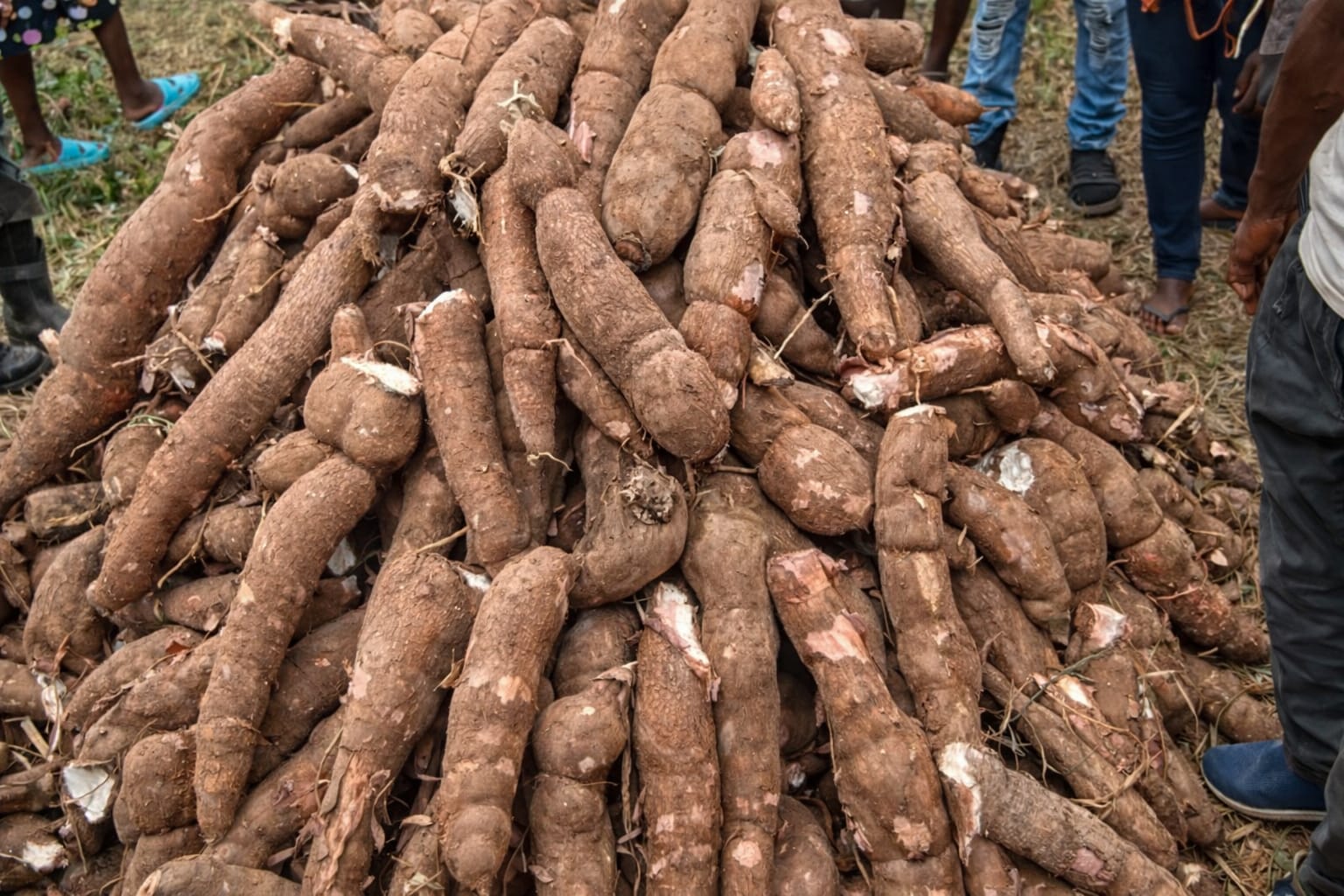
Cassava is one of the most reliable food crops for farmers living in dry areas with low and unpredictable rainfall. Unlike many crops that require regular moisture, cassava has unique characteristics that enable it to survive and produce food even under harsh weather conditions.
One of the main reasons cassava performs well in dry regions is its deep and extensive root system. The roots can penetrate deep into the soil to access moisture that remains unavailable to many other crops. This allows the plant to continue growing even when surface soils become dry.

Cassava also stores large amounts of water and nutrients in its tuberous roots. These reserves help the plant withstand long periods without rain. During drought, cassava slows down its growth and conserves energy, allowing it to survive until rainfall returns.
Another advantage is that cassava can grow in poor and less fertile soils where crops such as maize may struggle. It requires relatively low inputs and can still produce a reasonable harvest under challenging conditions. This makes it an affordable crop for small-scale farmers.
]

Cassava's flexible harvesting period is another major benefit. Farmers do not need to harvest immediately after maturity. The roots can remain underground for several months, acting as a natural food store until they are needed.
As climate change increases the frequency of droughts, cassava is becoming an important crop for food security across many parts of Africa. Its ability to tolerate dry conditions, produce reliable yields, and provide a dependable source of food makes it a valuable crop for farmers seeking resilience against changing weather patterns. For communities in arid and semi-arid areas, cassava remains a true survival crop and a key contributor to sustainable agriculture.