A bee smoker is one of the most important tools in beekeeping. It helps calm bees during hive inspection, honey harvesting, and hive maintenance. When used correctly, a smoker reduces bee aggression and makes work safer for both the beekeeper and the colony.
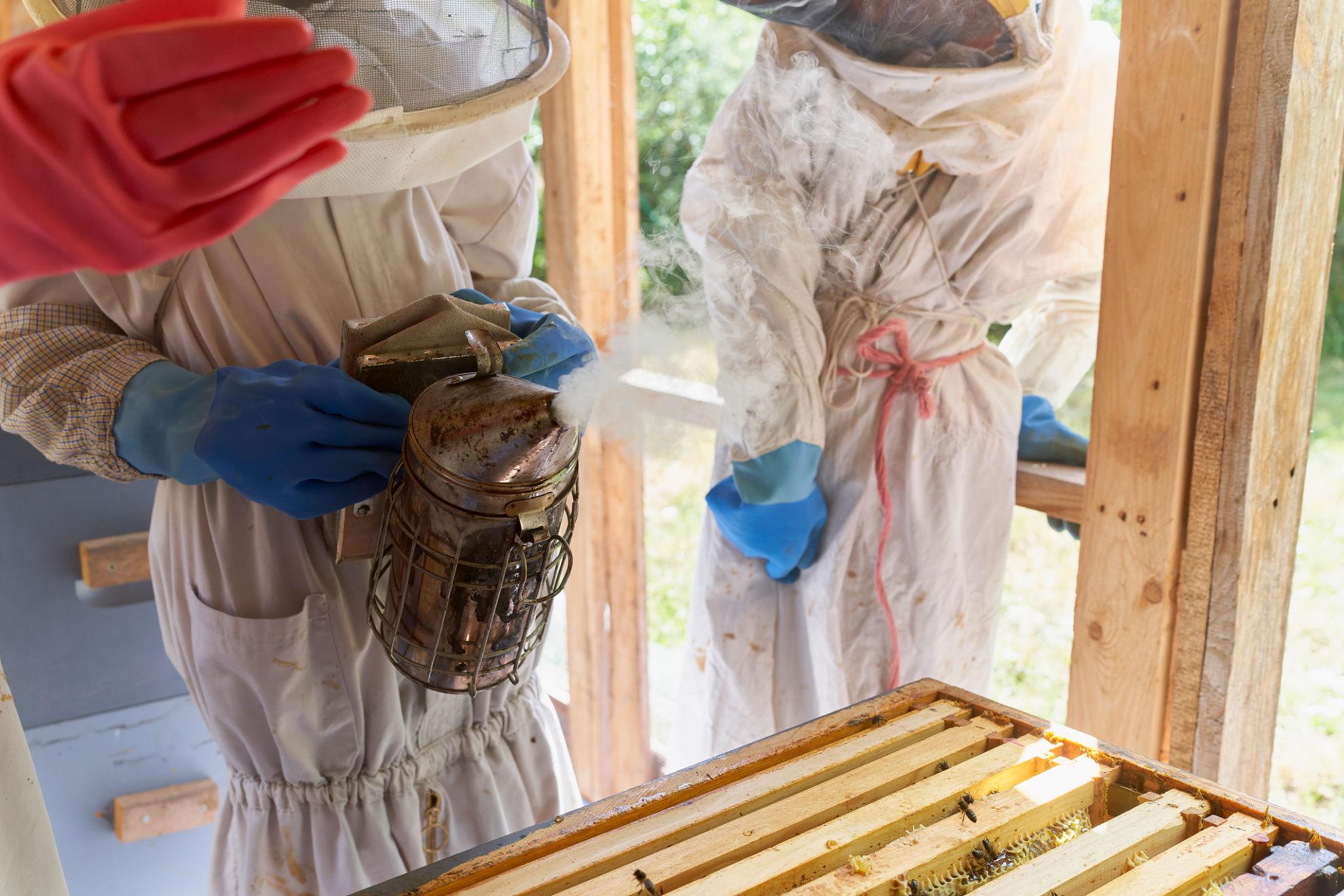
The smoker works by producing cool smoke that interferes with the bees’ alarm signals. Once bees sense smoke, they focus on protecting the hive and consuming honey instead of attacking. This gives the beekeeper enough time to inspect the hive peacefully.

To use a bee smoker properly, begin by preparing safe fuel materials such as dry grass, wood shavings, pine needles, dry leaves, or cardboard. Light a small fire inside the smoker and gently pump the bellows until thick cool smoke appears. Avoid using plastics, rubber, or chemically treated materials because they produce harmful fumes that can injure bees and contaminate honey.
Before opening the hive, puff smoke lightly at the hive entrance and wait for about 20 to 30 seconds. Open the hive slowly and apply a few more gentle puffs around the frames if necessary. Too much smoke can stress the bees and spoil the honey taste.

Beekeepers should also follow important safety precautions. Always wear protective clothing such as a bee suit, gloves, and a veil. Keep the smoker upright to prevent accidental fires, especially during dry seasons. Never place a hot smoker on dry grass or near flammable materials. After use, ensure the fire is completely extinguished by emptying the ashes safely.

Proper use of a bee smoker improves honey harvesting, protects bees from unnecessary disturbance, and keeps beekeepers safe. Every successful beekeeper should learn how to use this simple but powerful tool responsibly.